
Weekend Read: How America Created a “Pathway” Through Venezuela’s Defenses
The cyber, space, and electronic warfare operations that preceded the capture of Nicolás Maduro

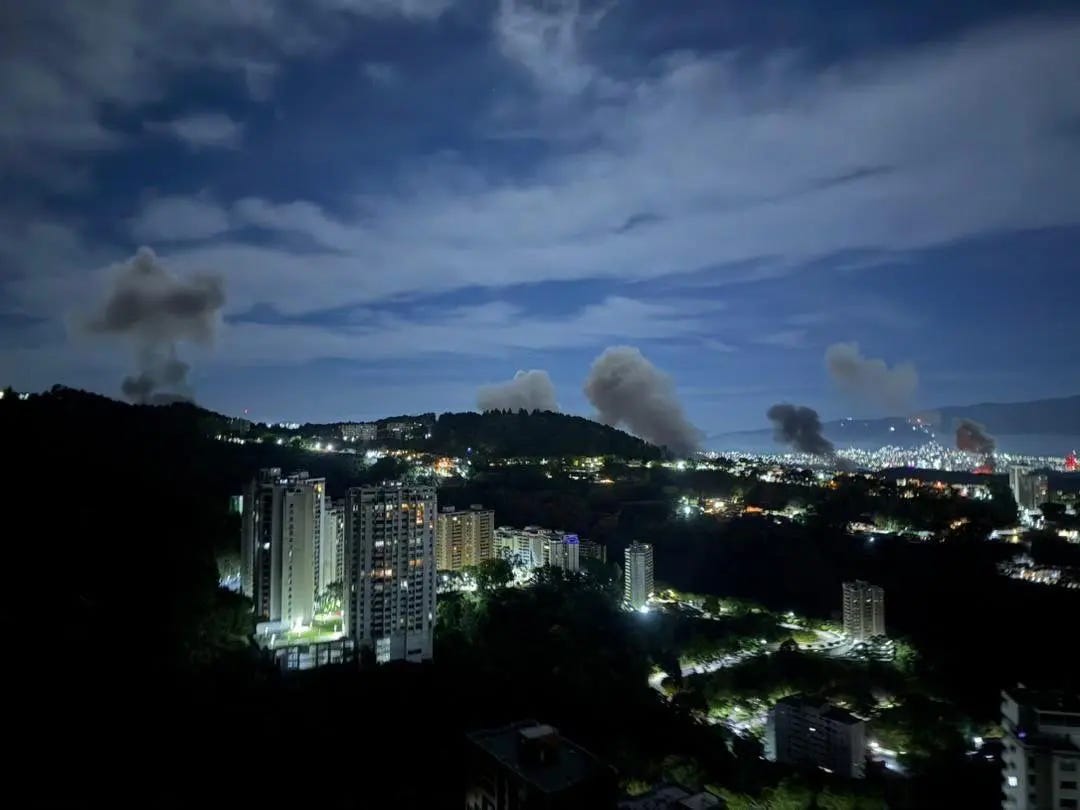
Many reporters have moved on from what happened in Venezuela to focus on what’s happening next. But I’m still trying to understand how it happened.
I’ve spent several days trying to figure out how Delta Force was able to land in downtown Caracas and extract a country’s leader without losing an aircraft or a single life, and two casualties, including a MH-47 Chinook helicopter pilot who was wounded in the leg. (US officials say the operation killed 75 people, about half of them Cuban personnel; Venezuela says the toll is higher.)
Earlier this week, I wrote about how the Delta raid will join the annals of special operations missions. What I overlooked was what came before it: the quiet dismantling of Venezuela’s ability to see, communicate, and respond.
Delta Force didn’t arrive in the dark. The dark arrived first.
Beginning on the night of Jan. 2 and continuing into the next morning, the United States launched one of the most sophisticated multi-domain attacks in modern warfare, systematically disabling Venezuela’s defenses before a single helicopter crossed the coastline.
“The word ‘integration’ does not explain the sheer complexity of such a mission,” Gen. Dan Caine, the chairman of the Joint Chiefs of Staff, said at a press conference held at President Trump’s Florida compound.
“An extraction so precise it involved more than 150 aircraft launching across the Western Hemisphere in close coordination, all coming together in time and place to layer effects for a single purpose, to get an interdiction force into downtown Caracas while maintaining the element of tactical surprise. Failure of one component of this well-oiled machine would have endangered the entire mission.”
The success of Operation Absolute Resolve hinged on a capability that remains poorly understood outside the intelligence community: the ability to disrupt and disable modern air-defense and command systems before their operators can understand what is happening.
Whatever you think of the legality or precedent of apprehending—or kidnapping—a foreign head of state from his bedroom and flying him and his wife back to New York in handcuffs, the operation itself offers a rare window into modern American warfare. Describing how it worked is not the same as endorsing it, but failing to examine it would leave an important gap in public understanding.
What Didn’t Work
Venezuela possessed what appeared, at least on paper, to be a formidable set of air defenses: approximately 100 medium- and long-range surface-to-air missiles concentrated around Caracas, exactly where the operation would unfold.
Priority No. 1 was neutralizing the S-300VM “Antey-2500” missiles, acquired in 2009 as part of an estimated $2 billion Russian arms package purchased by then-President Hugo Chávez with a Kremlin loan.
“With these rockets it’s going to be very difficult for foreign planes to come and bomb us,” Chavez said at the time.
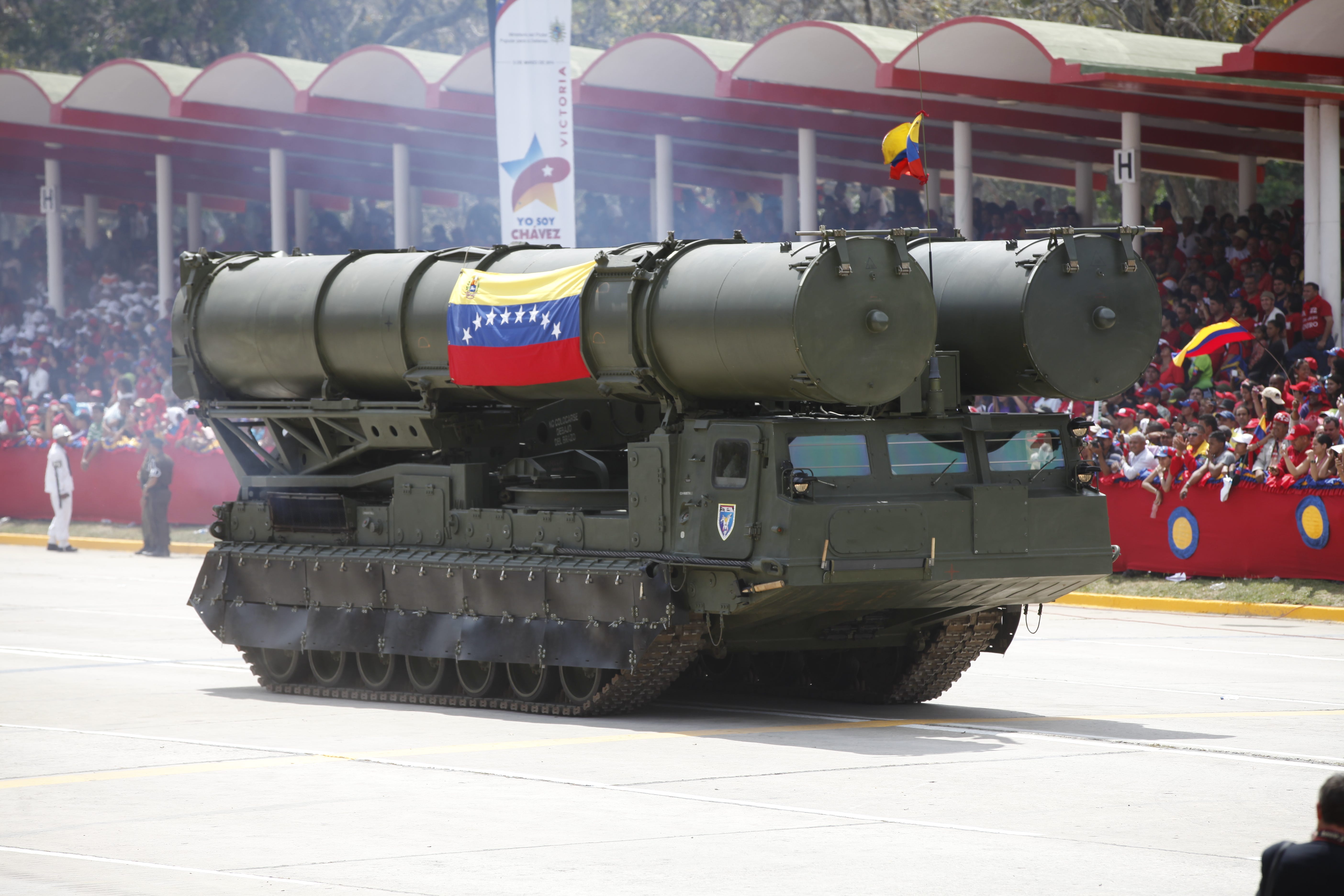
The S-300 is a long-range surface-to-air missile designed to engage aircraft, drones, and even ballistic missiles. Russia sold it to Iran, Syria, China, and others as a shield to protect the things a state values most: government centers, industrial sites, military bases, troop formations, coastal infrastructure, and naval forces.
Each time tensions flared between Washington and Caracas, Russia seized the opportunity to reinforce Venezuela’s air defenses and insert itself in the hemisphere. During President Trump’s first term in 2019, Moscow dispatched military advisers to help refurbish and sustain the S-300 systems, including hardening them to operate during power outages. In November, a senior Russian lawmaker said additional air-defense equipment had been delivered to Venezuela, including Buk-M2E medium-range surface-to-air missile systems.
“Americans could be in for some surprises,” Alexei Zhuravlev, First Deputy Chairman of the State Duma Defense Committee, told Gazeta.Ru.
For a decade, those types of warnings had made it sound as if Russian systems backed by Chinese radar made the Caribbean a potential kill zone for American aircraft. Before dawn on January 3rd, they had been rendered useless.
“Seems those Russian air defenses didn’t quite work so well, did they?” Defense Secretary Pete Hegseth said Monday.
The S-300VM batteries never appear to have been activated. The Buk systems stationed at La Carlota airbase in Caracas were reportedly destroyed on the ground. Russian Su-30 fighter jets never launched. Whatever combination of surprise, electronic attack, cyberwarfare, and network disruption was employed, the battle was decided before the first helicopter crossed the coastline.
The failure was not just technical. As Kari Bingen, a former senior Pentagon intelligence official now with the Center for Strategic and International Studies, put it in an interview with The After-Action Report, “It’s one thing to have a weapon system. It’s another thing to be proficient on it, to train with it, and to integrate it into an operational force. Having the kit is not the same as knowing how to use it.” Where the US military holds a decisive advantage, she said, is in training, readiness, and the ability to integrate systems across a joint force.
