
The Conspiracists' War
Inside the shadow briefings that linked Venezuela, stolen-election claims, and real-world killings at sea.

Correction appended
As the U.S. masses thousands of Marines and sailors and a Navy flotilla in the Caribbean, launching airstrikes on Venezuelan speedboats that have killed 21 people, it’s worth asking a question few others are: Are we drifting toward war because the president believes Venezuela helped steal the 2020 election?
Some of the same figures whose claims about Venezuela’s role in stealing elections have been rejected in court have been providing the Trump administration with intelligence about Venezuelan threats—a narrative much of the U.S. intelligence community views as not credible but that has nonetheless gained traction in the White House.
Among them: Gary Berntsen, a retired senior CIA operations officer who led the agency’s hunt for Osama bin Laden in Afghanistan.
Berntsen is part of a team that has briefed the FBI and Department of Homeland Security about the drugs, crime, and election fraud that members of the group believe Venezuela’s leader, Nicolás Maduro, is exporting to destabilize the United States. A former officer in the CIA’s Latin America Division, Berntsen spent part of his career focused on the region.
“He is part of a package of people who have spent months transferring out information and proof into government hands,” said a source familiar with the effort who was also involved in the administration briefings.
Before the inauguration, Berntsen participated in a presentation identifying alleged members of the Tren de Aragua gang sent by Maduro’s regime to wreak havoc in the Americas.
The claims are specific and sweeping. The Miami Herald reported in March that before the 2025 inauguration, Berntsen and others presented incoming Trump officials with the identities of 1,800 alleged members of Venezuela’s Tren de Aragua gang they claimed had been sent by Maduro’s government to infiltrate the United States. “The Venezuelan regime has assumed operational control of these guys [Tren de Aragua] and has trained 300 of them,” Berntsen said.
The team’s information reportedly comes partly from sources inside Venezuela, including Venezuelan military and police officials said to be covertly assisting U.S. law enforcement. Additional material, including interviews with Venezuelan officials—among them an election officer whose anonymous testimony was submitted in court last month by lawyers for jailed former Colorado election clerk Tina Peters—has also been passed to the administration.
In a recent Substack article, journalist Jonathan Larsen identified a key source as Berntsen’s business partner Martin Rodil, a Venezuelan-born Israeli citizen who has worked with U.S. agencies on cases involving corrupt Venezuelan officials and traffickers.
But most of the U.S. intelligence community has rejected the core claims. An April National Intelligence Council memo examining alleged ties between Maduro and Tren de Aragua concluded that “most of the U.S. intelligence community judges that intelligence indicating that regime leaders directing or enabling the gang’s migration to the United States are not credible” and need further corroboration, noting that the gang is too decentralized and Venezuela’s law enforcement treats it as a threat.
A former senior CIA official told The After-Action Report that the group’s effort was “bullshit” and “self-promotion.” Reliable government sources inside Venezuela—the kind who could confirm whether Maduro’s security services are directing Tren de Aragua’s activities—are difficult to develop even for CIA professionals. Venezuela’s security apparatus is deeply intertwined with Cuba’s top-notch intelligence service, making meaningful espionage there exceedingly difficult. Independent operatives without agency backing or secure communications would stand little chance.
Director of National Intelligence Tulsi Gabbard later dismissed the NIC’s top two career officials after the memo leaked, a move widely seen as retaliation for contradicting the administration’s narrative.
The memo did reveal a split within the intelligence community. FBI analysts, while agreeing with the broader IC assessment, believe “some Venezuelan government officials facilitate TdA members’ migration from Venezuela to the United States and use members as proxies” to advance destabilization goals in several countries, “based on DHS and FBI reporting as of February 2024.” (emphasis in original)
Escalation at Sea
The administration has acted aggressively against the Venezuelan threat, as pushed by Berntsen and others. In February, the State Department designated Tren de Aragua a foreign terrorist organization. In March, the president invoked the 1798 Alien Enemies Act to counter what he described as an “invasion” by Tren de Aragua gang members who had “infiltrated” the Maduro regime, including its military and law enforcement apparatus.
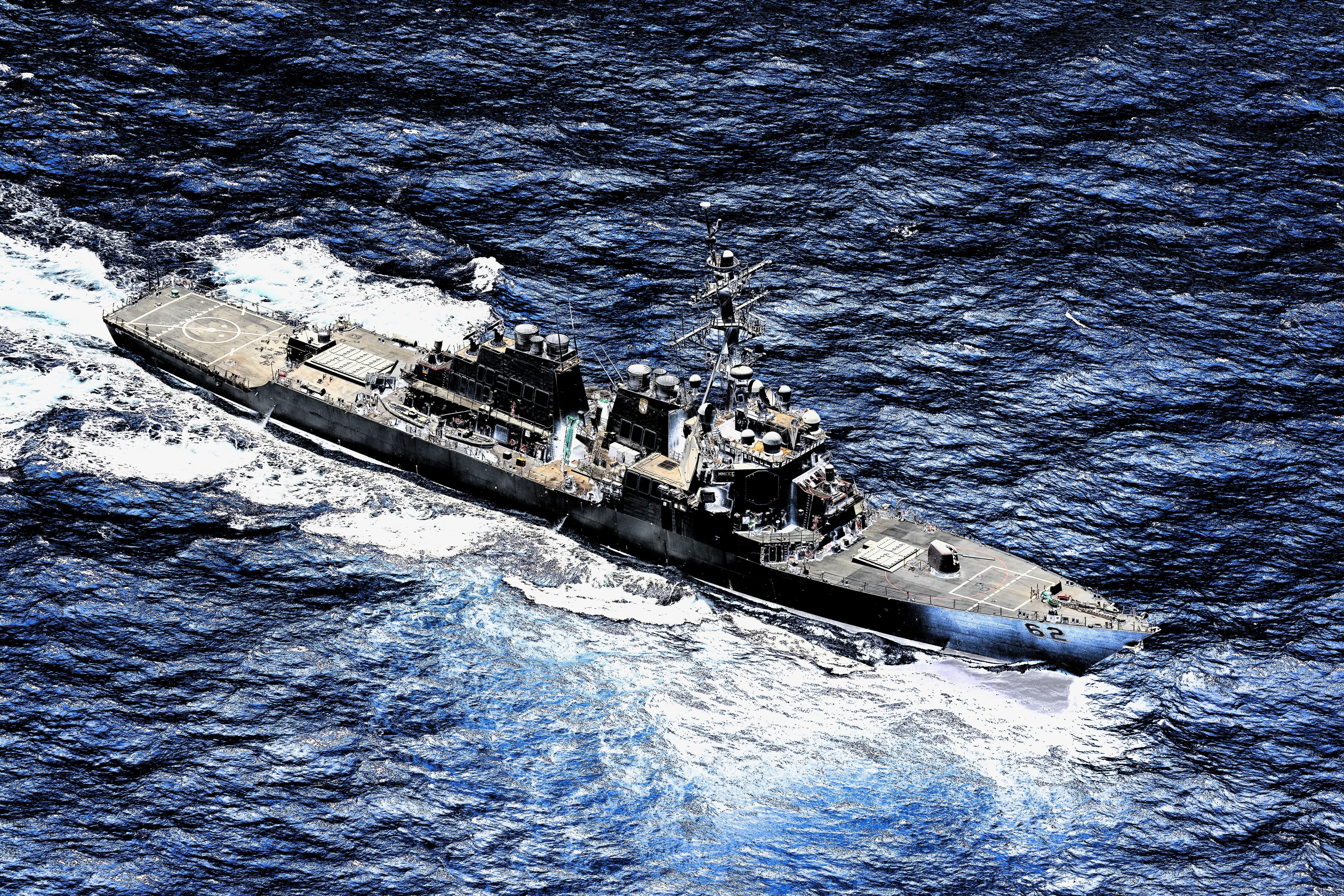
In recent weeks, the administration has stepped up pressure on Maduro, deploying a Marine expeditionary unit, F-35s, eight warships, and a Special Operations “mothership” to the Caribbean. On Friday, the U.S. military destroyed a fourth Venezuelan speedboat allegedly carrying drugs, strikes that legal experts say are illegal under U.S. and international law. (Trump initially claimed the 11 people killed in the first drone strike were members of the Tren de Aragua gang, a claim he has not repeated.) He has since hinted that further attacks may be “coming by land.”
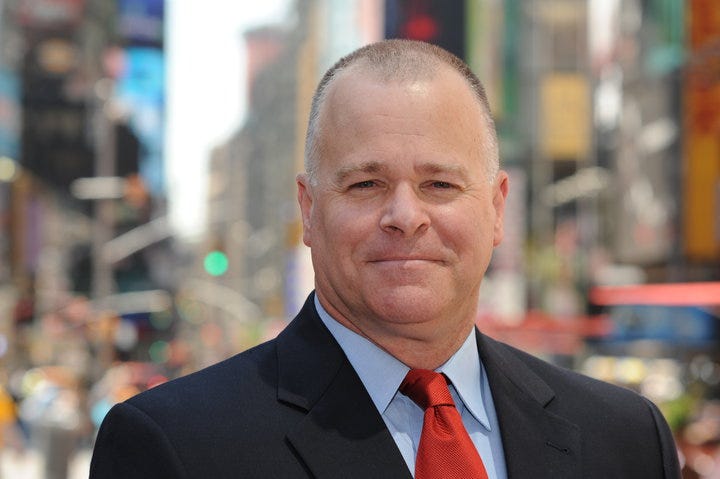
Berntsen was an early Trump supporter in 2016, and the campaign highlighted his endorsement to bolster its thin foreign-policy credentials. A loyal MAGA figure ever since, he remains part of the constellation of former national security figures swirling around the administration.
The administration’s receptiveness to figures like Berntsen stems from its deep distrust of the U.S. intelligence community. Trump and his advisers have long viewed the CIA and FBI as part of a “deep state” that undermined them through leaks and bogus investigations. In that climate, outside operatives offering unfiltered intelligence or bold plans against adversaries can seem more credible than career officials viewed as disloyal or risk-averse.
But there’s a more personal reason Trump may be listening: Berntsen and others deeply involved in the Venezuela effort, like Rodil and former Overstock CEO Patrick Byrne, were among the early voices who told him the 2020 election was stolen.
“We are the people that went initially and walked into Rudy Giuliani and Sidney Powell and said, they stole this election,” Berntsen told podcaster Adam Carolla last month. “We know the company. We understand the techniques.”
These claims have repeatedly failed in court, led to the disbarment of Giuliani and other lawyers who advanced them, were part of Fox News’ $787.5 million defamation settlement, and helped spark the January 6 attack and Trump’s indictment. Yet Berntsen and others continue to promote them.
The Smartmatic Thread
They trace the alleged plot to Smartmatic, a British firm originally founded in Florida by Venezuelans that supplies voting systems in the United States and abroad. No verified evidence links Smartmatic to alleged 2020 vote tampering, but the company has long drawn U.S. government scrutiny over its ties to Venezuela. In 2024, a Smartmatic co-founder and two executives were indicted for allegedly bribing Philippine election officials in a case unrelated to U.S. voting.
Berntsen’s campaign against Venezuela reflects the same hard-charging temperament that defined his CIA career. Inside the agency, he had a reputation as “a bit of a wild man” with a “mad-dog warrior ethos,” as his CIA colleagues would later write in memoirs. In Jawbreaker, his own account of the bin Laden operation, Berntsen described butting heads with military commanders in 2001 over his push to deploy Army Rangers to block bin Laden’s escape from Tora Bora. The Delta operators loved him for it, but Berntsen was replaced after less than two months as Kabul station chief. When he got the news, he punched a hole in a door.
He appears to have worn out his welcome again after feuding with others involved in the Venezuela effort. One participant said Berntsen’s abrasive manner toward FBI agents and others led to his removal from further briefings. Yet in a recent podcast, Berntsen said he has continued speaking with officials in Tulsi Gabbard’s office. Berntsen did not respond to messages seeking comment for this article.
Berntsen has continued pressing the Venezuela-election fraud connection through other channels. In June, he wrote a letter to Trump to delay the federal trial of General Hugo Carvajal, Venezuela’s former military intelligence chief, who was extradited from Spain. He argued that Carvajal’s testimony was “key to prosecuting the conspirators involved in stealing the 2020 election,” warning that a conviction would end his incentive to cooperate. In a surprise move, Carvajal pleaded guilty to narcoterrorism conspiracy five days before trial. As Associated Press reporter Joshua Goodman noted, the timing suggested Carvajal may have been trying to attract Trump’s attention with information about Smartmatic.
Retired Lt. Gen. Michael Flynn, a leading proponent of election-fraud claims, wrote recently on X that one reason Trump has a small armada off Venezuela’s coast is “the voting systems the Venezuelans perfected to help steal elections around the world on behalf of select intelligence agencies and certain nation-states.”
Those claims are at best unproven. The former senior intelligence official called that claim “a story in search of evidence.” Venezuela lacks the technical capability for such an operation. Russia or China might, but they would never hand that technology to Caracas.
Still, Trump could be inclined to believe it. During his first term, he embraced the discredited theory that Ukraine, not Russia, interfered in the 2016 election, a claim U.S. intelligence agencies later identified as Russian disinformation.
No one can say for sure what is driving Trump’s military decisions or why he has dismissed Maduro’s request for talks. But the pattern is clear: The same figures who fed him stolen election theories are now feeding him intelligence on Venezuela that his own agencies reject—and 21 people are dead.
Correction: Tren de Aragua was designated as a Foreign Terrorist Organization in February 2025, not on Trump’s first day in office.